
2026 Baseball Moneyline Value Calculator & Stats
 Available in US
The moneyline is where most baseball bettors live. No spreads to cover, no complicated formulas, just pick the winner and collect if you’re right. Sounds simple enough, doesn’t it? But here’s the thing about simplicity in betting it’s usually hiding complexity underneath.
Walk into any sportsbook or open any betting app during baseball season, and you’ll see the same pattern playing out thousands of times daily. Recreational bettors hammer the favorites. Yankees minus-180? Sure, they’re good, so let’s bet them. Dodgers minus-200? They’ve got the best record in baseball, easy money. And then those same bettors wonder why their bankroll slowly bleeds away despite backing teams that win more than they lose.
The mathematics of baseball moneyline betting tells a different story than what most people expect. Understanding when to bet favorites versus underdogs isn’t about picking which team is better it’s about identifying where the betting line offers value relative to the actual probability of each outcome. Get this wrong and you’re essentially donating money to sportsbooks. Get it right and baseball’s long season becomes a genuine opportunity to generate consistent profit.
This guide breaks down everything you need to know about baseball moneyline betting. We’ll cover how odds work, why heavy favorites are usually terrible bets, when underdogs offer the best value, and the specific situations where betting favorites makes sense. By the end, you’ll understand why sharp bettors gravitationally toward plus-money dogs while casual bettors keep paying premium prices for favorites that don’t win often enough to justify the cost.
The Mathematics of 2026 Moneyline Payouts
American odds format dominates baseball betting, and if you’re new to this, the plus and minus signs probably look arbitrary. They’re not. Every number tells you exactly how much you’re risking versus how much you can win.
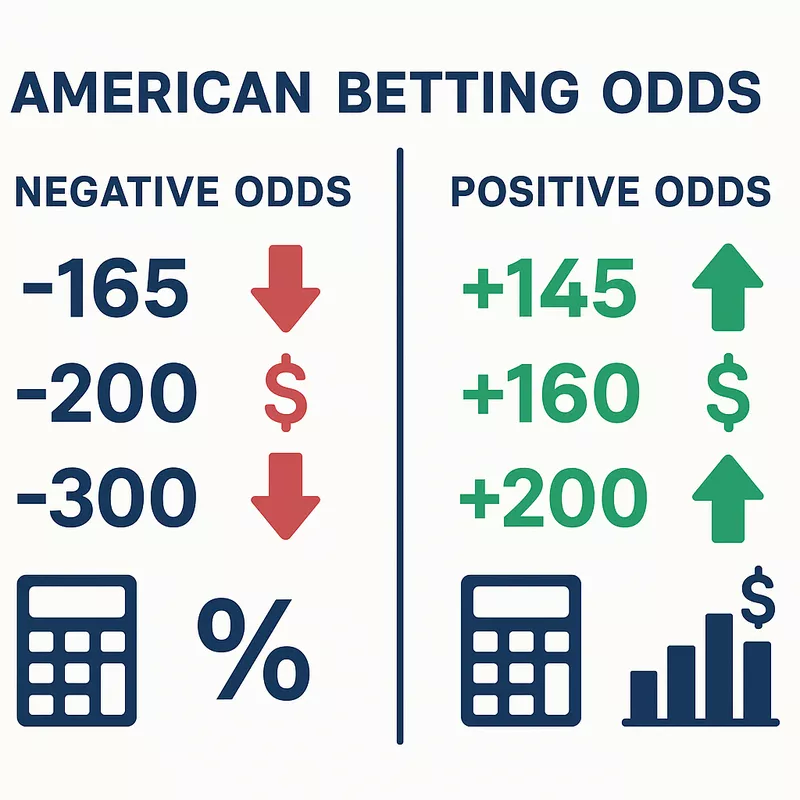
Negative numbers indicate favorites teams expected to win. If the Red Sox are listed at minus-165, you need to risk one hundred sixty-five dollars to win one hundred dollars. The higher the negative number, the bigger the favorite, and the more you have to risk for the same potential profit. A minus-300 favorite requires you to bet three hundred dollars just to win one hundred.
Positive numbers indicate underdogs teams expected to lose. If the Orioles are listed at plus-145, a one hundred dollar bet wins you one hundred forty-five dollars if they pull the upset. The higher the positive number, the bigger the underdog, and the more you stand to profit relative to your risk.
Here’s a real example from a random Tuesday game in August. The Astros are hosting the Athletics. The board shows Astros minus-185, Athletics plus-160. If you bet one hundred dollars on Houston, you’re risking one hundred to win about fifty-four dollars. If you bet one hundred on Oakland, you’re risking one hundred to win one hundred sixty.
That difference matters enormously over the course of a season. Let’s say you bet ten games, winning six and losing four. Sounds like a winning record, right? But if those six winners were all minus-185 favorites, you won three hundred twenty-four dollars. Your four losses cost you four hundred dollars. Despite winning sixty percent of your bets, you lost seventy-six dollars.
Now flip it. Same ten games, six wins and four losses, but this time you’re betting plus-160 underdogs. Your six winners paid nine hundred sixty dollars. Your four losses cost four hundred. You profited five hundred sixty dollars with the exact same win rate.
This is why understanding moneyline math matters more than picking winners. The sportsbooks already know roughly how often each team will win. The odds they offer aren’t trying to predict outcomes they’re trying to balance their action while maintaining an edge. Your job is finding spots where the odds don’t properly reflect the actual winning probability.
Converting Odds to Implied Probability
Every betting line contains an implied probability the win rate you’d need to break even at those odds. Calculating this tells you whether a bet offers value.
For favorites, the formula is: (negative odds) divided by (negative odds plus 100). That minus-165 Red Sox line converts to 165 divided by 265, which equals 62.3 percent. The sportsbook is suggesting the Red Sox should win this game about sixty-two percent of the time.
For underdogs, the formula is: 100 divided by (positive odds plus 100). That plus-145 Orioles line converts to 100 divided by 245, which equals 40.8 percent. The book suggests Baltimore wins roughly forty-one percent of the time.
Notice how these don’t add up to one hundred percent. They add to 103.1 percent. That extra 3.1 percent? That’s the vig the sportsbook’s built-in edge. This is how they profit regardless of outcome. Both sides have to overcome not just the actual probability of winning, but also this mathematical disadvantage.
Here’s where it gets interesting for bettors. If you believe the Red Sox actually win this matchup seventy percent of the time, betting them at minus-165 offers massive value. You’re getting odds that suggest sixty-two percent when reality is seventy percent. Over hundreds of bets with that kind of edge, you’ll crush it.
Conversely, if you think the Red Sox only win fifty-five percent of the time, that minus-165 line is terrible. You’re paying for a sixty-two percent win probability when the actual probability is only fifty-five percent. You’ll lose money long-term even when they win more than half their games.
This is the core skill of moneyline betting developing your own assessment of win probability and comparing it to what the betting line suggests. When your assessment differs significantly from the line, you’ve potentially found value. When they align closely, there’s no bet to make.
The Math Problem With Heavy Favorites
Baseball favorites lose more often than favorites in any other major sport. This single fact should fundamentally change how you approach moneyline betting, yet most bettors ignore it completely.
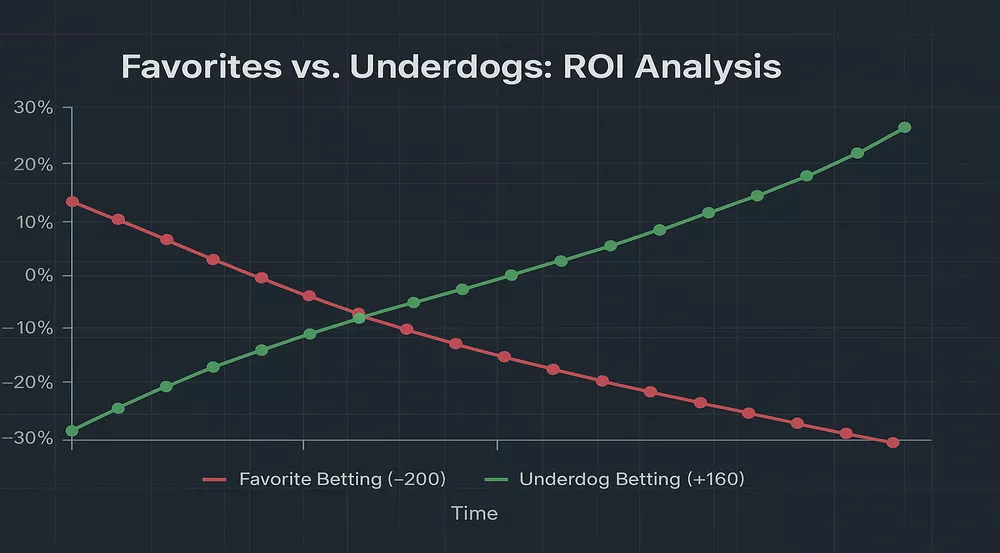
In the NFL, favorites win roughly seventy percent of games. In the NBA, it’s closer to sixty-five percent. In MLB? Favorites win only about fifty-eight to sixty percent of games. The sport has too much parity, too much randomness in individual games, for favorites to dominate the way they do in football or basketball.
This creates a mathematical nightmare for bettors who consistently back heavy favorites. Let’s run the numbers on a minus-200 favorite. At those odds, you need to win exactly 66.7 percent of your bets just to break even. Not to profit just to avoid losing money. And the best teams in baseball don’t win sixty-seven percent of their games over a full season.
The 2001 Seattle Mariners won one hundred sixteen games, which is one of the best records in modern baseball history. Their win percentage was .716 about seventy-two percent. But that was over one hundred sixty-two games. In any given game, even that historically great team didn’t win seventy-two percent of the time when you account for opponent quality and pitching matchups.
Look at more typical contenders. A team that wins ninety-five games finishes with a .586 winning percentage. That’s fifty-nine percent. If you’re betting them at minus-200 prices all season, you’re paying for a sixty-seven percent win expectation when they only deliver fifty-nine percent. The losses compound brutally.
Here’s another way to think about it. Bet three games on minus-200 favorites, risking two hundred to win one hundred on each. If you go two for three winning sixty-seven percent you break even exactly. Won two hundred on the winners, lost two hundred on the loser. Zero profit. But if you go one for three or zero for three, which happens constantly in baseball, you’re hemorrhaging money.
The sportsbooks love when bettors pound heavy favorites because the math works overwhelmingly in the house’s favor. Even when favorites win more than they lose, the bettor still loses money because of the price they’re paying. This is the trap that destroys more baseball bankrolls than any other single mistake.
If you find the favorite’s price too high, consider switching to MLB run line strategies to increase your potential payout.
The psychological appeal is obvious. Betting a minus-220 favorite feels safer than betting a plus-180 underdog. You’re backing the better team, the team more likely to win. But betting isn’t about being right it’s about being right relative to the price you’re paying. A bet on a favorite that wins fifty-five percent of the time at minus-200 prices is a worse bet than an underdog that wins forty percent of the time at plus-200 prices.
The Case for Betting Underdogs
Everything we just discussed about favorites applies in reverse to underdogs, which is why sharp bettors built successful long-term strategies around plus-money plays.
A plus-150 underdog only needs to win about forty percent of the time to break even. Think about that. You can lose more than half your bets and still make money. In baseball, where variance runs wild and underdogs win all the time, forty percent is an incredibly achievable bar.
Historical data backs this up consistently. Underdogs in the plus-120 to plus-170 range show long-term profitability if you bet them blindly. Obviously you don’t want to bet blindly proper handicapping improves results dramatically but the fact that even random underdog betting in this range shows positive returns tells you where the structural value lives.
The reason comes back to market dynamics. Recreational bettors overwhelmingly prefer favorites, especially popular teams. When seventy percent of the betting public hammers the Yankees at minus-180, the sportsbook has no incentive to move the line further. They’re already getting lopsided action on one side, which means sharp money or balanced exposure can come in on the underdog at an inflated price.
This is how reverse line movement works. The public pounds the favorite, but the line moves toward the underdog. That movement signals that respected money sharp bettors with proven track records is taking the dog. The sportsbook respects this money more than they respect the volume of recreational tickets on the favorite.
Finding value on underdogs often means targeting specific situations where the public overreacts. Popular teams like the Yankees, Red Sox, Dodgers, and Cubs get bet up beyond their actual value because casual fans want action on recognizable names. A random Tuesday game in July where the Yankees are minus-195 against a division opponent probably contains underdog value even if you don’t know anything else about the matchup.
Recent performance also creates opportunities. When a team wins five straight, the public assumes they’ll keep winning. When a team loses five straight, the public assumes they’ll keep losing. But baseball doesn’t work that way. Teams regress to their talent level. Hot streaks end. Cold streaks end. The betting lines often lag behind this reality, creating value on underdogs who’ve been recently terrible but are actually decent teams facing neutral or favorable matchups.
The sweet spot for underdog betting seems to live between plus-120 and plus-160. These are teams with legitimate chances to win maybe thirty-five to forty-five percent actual win probability but priced as if they’re bigger longshots. You’re not betting complete punching bags. You’re betting competent teams in spots where the public has undervalued them.
Going below plus-120 often means the underdog isn’t offering enough of a premium to overcome the lower win rate. Going above plus-180 or plus-200 usually means you’re betting genuinely bad teams in terrible spots, and even baseball’s variance doesn’t overcome massive talent gaps consistently enough.
When Betting Favorites Makes Sense
Despite everything we’ve said about avoiding heavy chalk, there are absolutely spots where betting favorites is the right play. The key is understanding when the price justifies the risk.
The magic range for favorite betting lives between minus-130 and minus-150. At these prices, you’re paying a premium but not an absurd one. A minus-145 favorite needs to win roughly fifty-nine percent of the time to show profit. Good teams with favorable matchups can absolutely clear that bar.
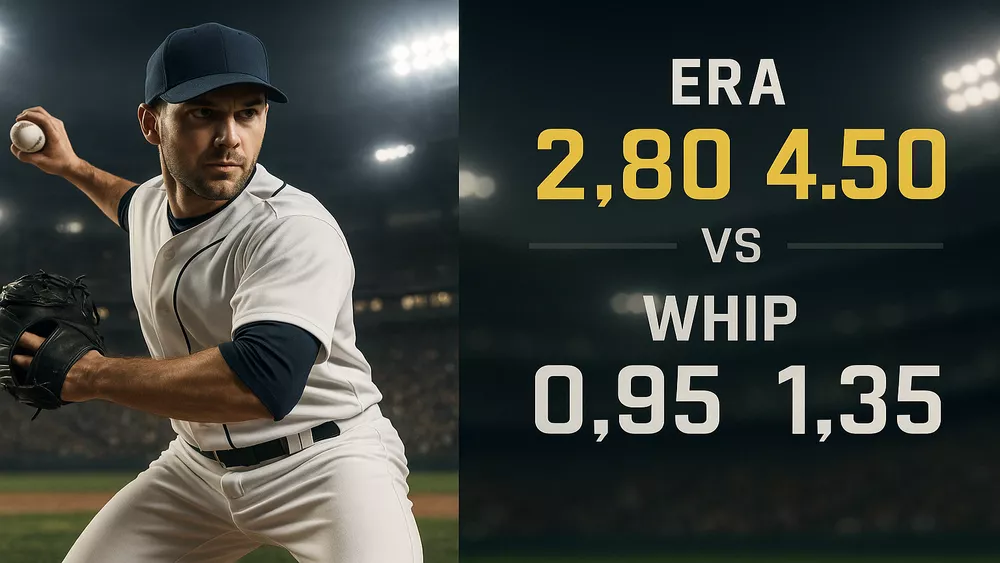
Elite pitching matchups are the clearest example. When an ace with a 2.80 ERA and a 0.95 WHIP is facing a lineup he historically dominates, and the opposing starter has a 4.50 ERA and gives up hard contact consistently, that favorite might genuinely win seventy percent of the time. If the line is only minus-140, you’re getting value on the favorite.
The matchup matters more than the team’s overall record. A first-place team starting their fifth starter against another team’s ace? That’s not a favorable spot even if the first-place team has a better record. But that same first-place team with their ace going against a struggling opponent? That’s where favorite value potentially lives.
Home field advantage exists in baseball, though it’s smaller than in other sports. Home teams win about fifty-four percent of games overall. But certain ballparks create larger advantages, especially when you account for how specific teams and pitchers perform in those parks. A team with excellent pitching playing at home in a pitcher-friendly park against a team with weak offense creates edges that might justify betting them as a moderate favorite.
Bullpen matchups also matter for favorites. If you’re betting a full game and not just the first five innings, bullpen quality affects the outcome significantly. A favorite with an elite bullpen facing a team whose bullpen has an ERA over five? That late-game edge often tips close games toward the favorite, justifying a higher price.
Situational spots create favorite value too. Teams in must-win situations facing elimination in a series, fighting for playoff positioning in September show measurably better performance than the same teams in meaningless games. If you can identify when a favorite has genuine urgency that the line hasn’t fully priced in, betting them makes sense.
The other consideration is series betting rather than individual games. If the Yankees are playing a three-game series against the Orioles, you might not want to bet Yankees minus-180 in game one. But Yankees to win the series at minus-140 might offer value. They just need to win two of three, which good teams do consistently against weaker opponents. Series prices smooth out some single-game variance while keeping you on the better team.
Divisional Underdogs: The Sharp Bettor’s Secret
Here’s something most casual bettors don’t realize: division games create unique dynamics that often produce underdog value.

Teams play their division rivals nineteen times per season. That’s nineteen games against the same pitching staffs, the same lineups, the same coaching strategies. Familiarity breeds something close to equality, even when one team is significantly better on paper.
A team that’s ten games under five hundred can absolutely take a series from a division leader they’ve faced seven times already this year. They know the opposing ace’s tendencies. They’ve seen the setup man throw in pressure situations. They’ve faced this exact lineup configuration multiple times. The talent gap still exists, but the information gap has closed.
This shows up in the data. Divisional underdogs of plus-130 to plus-170 show consistent long-term profitability. The lines don’t fully account for this familiarity factor because sportsbooks set prices based primarily on overall team quality and pitching matchups. The intangible element of “we’ve played these guys two dozen times and know how to attack them” doesn’t show up in standard handicapping metrics.
Late in the season, this effect intensifies. September games where a last-place team plays their division rival for the twelfth time that year? The favorite might be overpriced by a full twenty or thirty cents based solely on the talent gap while ignoring that the underdog has solved this pitching staff already.
Another angle on divisional underdogs involves rest and travel. Division games often involve shorter travel distances. A West Coast team visiting another West Coast opponent isn’t dealing with time zone changes or cross-country flights. They’re playing as close to home as you can get while being on the road. That reduces some of the typical road disadvantages that betting lines account for.
Avoiding the Parlay Temptation
We need to address parlays because they’re where casual bettors go to destroy their bankrolls while thinking they’re being clever.
A parlay links multiple bets together into one wager. Instead of betting Yankees minus-150 and Dodgers minus-165 separately, you combine them. If both win, the payout multiplies. If either loses, you lose the entire bet.
The math on parlays looks appealing at first glance. A two-team parlay at standard minus-110 prices pays about 2.6 to one. Bet one hundred, win two hundred sixty. A three-team parlay pays about six to one. A four-team parlay pays about eleven to one. String together five favorites and suddenly you’re looking at twenty to one payouts or better.
Here’s the problem. Every leg has to hit. Every single one. And the odds the sportsbook offers on parlays are worse than true odds.
If you bet two minus-150 favorites separately and both win, you risk three hundred to win two hundred a total return of five hundred including your stake. If you bet those same two games as a parlay, the payout is only about four hundred thirty total. The sportsbook is shorting you seventy dollars on the same two wins because you parlayed them.
This gap widens with every leg you add. A four-team parlay of minus-150 favorites should pay out around twenty-four to one at true odds. Most books pay closer to eleven to one. You’re giving up more than half your potential profit for the convenience of linking bets together.
The bigger issue is the win probability. Even if each leg has a sixty percent chance of hitting, the probability of all four hitting is only about thirteen percent. You need that four-team parlay to hit roughly once every seven or eight attempts just to break even, and even then you’re barely scratching profit because of the reduced payout.
Sharp bettors avoid parlays almost entirely. The only exception might be correlated parlays like betting a favorite on the run line and the under, since if the favorite wins big, the game likely stays low scoring. But even then, the reduced payouts make it questionable value.
If you want to bet favorites, bet them straight. If you want to bet underdogs, bet them straight. The parlays are entertainment bets for people who want a lottery ticket, not a sustainable strategy for making money.
Line Shopping and Timing Your Bets
Getting the best price on your moneyline bets might be the single highest-value activity you can engage in relative to time invested.
Let’s say you want to bet the Rays as a plus-155 underdog. You check your main sportsbook and see plus-155. You assume that’s the line everywhere and place your bet. But if you’d checked two other books, you might have found plus-160 at one and plus-165 at another. By taking two minutes to compare, you just improved your potential profit by ten dollars on a one hundred dollar bet.
Ten dollars doesn’t sound like much. But if you make two hundred bets over a baseball season totally reasonable given how many games there are and you improve each line by an average of five cents, that’s a thousand dollars in extra profit from simply comparing prices. Most people spend more time comparing prices when buying a television than they do when placing a bet, which is insane given that the betting price directly impacts their profit.
Different sportsbooks set lines independently. They’re all trying to accomplish the same thing balance their exposure but they have different customer bases with different betting patterns. A book with lots of Yankees fans might shade their Yankees lines toward the favorite to discourage lopsided action. A book with more sharp bettors might offer tighter lines. These variations create opportunities.
Check out the top-rated MLB sportsbooks to see which platforms offer the lowest margins on moneyline markets.
The timing of your bet matters too, though there’s no universal rule about when to bet. Some sharp bettors like betting as soon as lines open usually Sunday night for the following week to get numbers before other sharp money moves them. Other sharp bettors wait until close to game time to incorporate all available information about lineups, weather, and any late-breaking news.
What you shouldn’t do is bet randomly whenever you happen to think about it. Have a system. Either you’re betting early to beat line movement, or you’re betting late with maximum information. The middle ground betting Tuesday afternoon for that night’s game often gets you the worst of both worlds.
For underdogs specifically, early betting often provides better value. Recreational money pours in throughout the day on favorites, which often pushes underdog lines higher. A plus-145 dog in the morning might be plus-155 by game time. For favorites, the opposite can be true waiting might get you a better price as the line moves away from the popular side in response to sharp money.
Managing Your Moneyline Betting Bankroll
None of the strategy we’ve discussed matters if you’re not managing your money properly. Bankroll management isn’t exciting, but it’s the difference between lasting through baseball’s six-month grind and busting out by Memorial Day.
The standard guideline is betting between one and three percent of your total bankroll per wager. If you’ve set aside two thousand dollars for baseball betting, that’s twenty to sixty dollars per bet. Most serious bettors stay toward the lower end, around one to two percent, because baseball’s variance requires cushion.
Flat betting wagering the same amount on every play regardless of confidence level is the most sustainable approach. You might think you can identify which games are “locks” and deserve bigger bets, but you can’t. Nobody can. The games you’re most confident about will burn you just as often as the ones where you’re unsure. Flat betting removes emotion and forces discipline.
As your bankroll grows or shrinks, you adjust your unit size accordingly. Up twenty percent on the season? Your unit size increases by twenty percent. Down thirty percent? Your units shrink. This prevents the common pattern where bettors are doing well but not scaling their bets up to capture more value, or doing poorly and stubbornly maintaining large bets that accelerate their demise.
Tracking every bet you make is non-negotiable. You need to know your win rate, your return on investment, which bet types perform best for you, whether you’re better with favorites or underdogs, and how your results vary by situations. A simple spreadsheet works fine. Date, team, odds, result, profit or loss. This takes thirty seconds per bet and gives you data to improve your approach.
The psychological element of bankroll management might be even more important than the mathematical element. Baseball plays nearly every day for six months. You will have losing streaks. Good bettors with genuine edges still lose forty to forty-five percent of their bets. A losing streak of eight or ten bets is completely normal variance, not a sign your approach is wrong.
This is where proper unit sizing protects you. If you’re betting five or ten percent of your bankroll per game, a normal losing streak wipes you out. At one to three percent, you can lose ten straight and still have ninety percent of your bankroll intact. The emotional difference between being down ten percent versus down fifty percent is massive. One lets you stay disciplined and keep betting your system. The other creates panic and desperation.
Putting It All Together: A Practical Approach
Understanding moneyline betting theory matters, but translating that into actual profitable betting requires a practical framework you can implement consistently.
Start by accepting that you’re not going to bet every game. You shouldn’t bet every game. The volume of baseball creates constant opportunities, which means you can be incredibly selective. If you only find two or three games per day where you have genuine edge, that’s enough. Over a full season, that’s three hundred to four hundred quality bets more than enough sample size to see if your approach works.
Develop your own process for evaluating games. This might involve checking starting pitcher stats, looking at recent form, reviewing the weather and ballpark factors, checking lineup configurations, and comparing your assessment to the betting line. Whatever your process is, make it consistent. Do the same analysis the same way every time.
Focus on situations where you have an informational edge. Maybe you follow one division closely and understand the matchups better than the market does. Maybe you’re excellent at evaluating starting pitcher matchups. Maybe you’ve built models that identify value. Whatever your edge is, exploit it repeatedly rather than trying to have an opinion on every game.
When you find potential value, don’t just bet it automatically. Ask yourself: would I bet this at twenty cents worse odds? If the answer is no, your edge might be too thin. Would I bet this at twenty cents better odds? If yes, you probably have genuine value. This mental exercise helps distinguish between real edges and marginal spots where you’re forcing action.
Accept that results will be lumpy. You might have a week where you go twelve and three and feel like a genius. The next week you go three and ten and question everything. Neither result necessarily means anything about the quality of your process. Small samples in baseball are meaningless. Judge your approach over hundreds of bets, not dozens.
Understand that this is entertainment that you’re trying to make profitable, not a guaranteed income source. Even with perfect execution, variance means you might have losing months or even losing seasons. The goal is making positive expected value bets consistently and letting the math work over time. If you need guaranteed income, get a job. If you want to engage with baseball more deeply while potentially making money over the long run, this is the path.
The moneyline is simple in concept but complex in execution. Betting favorites feels safe but often bleeds money slowly. Betting underdogs feels risky but often provides the best mathematical value. Success comes from understanding when each approach makes sense, shopping for the best lines, managing your bankroll properly, and maintaining discipline through inevitable ups and downs.
Most bettors lose because they violate these principles consistently. They bet heavy chalk because they want to feel right even when the math says it’s wrong. They chase losses by increasing bet sizes. They bet without comparing odds across multiple books. They treat each game like it matters immensely rather than understanding that every individual bet is just one data point in a large sample.
Baseball’s long season rewards patience, discipline, and systematic approaches to finding value. The sportsbooks aren’t unbeatable. They’re just better prepared than most bettors. Level that playing field by doing the work, understanding the mathematics, and consistently executing a sound process. The moneyline might be baseball’s simplest bet, but betting it profitably requires anything but a simple approach.
