
2026 Baseball Run Line – Spread Value & ROI Tool
 Available in US
The run line is baseball’s answer to the point spread, except it’s not really an answer at all. It’s more like baseball looked at football and basketball, saw their spreads, and said “sure, we’ll try that, but we’re going to make it weird.”
Unlike the NFL where spreads move from three points to seven points to fourteen points depending on the matchup, baseball’s run line is almost always stuck at 1.5. The favorite has to win by two or more runs. The underdog can lose by one run and you still cash. This seemingly small difference creates entirely different betting dynamics than traditional point spreads, and most bettors who wander over from football or basketball completely misunderstand how to use it.
The run line exists because betting minus-200 favorites feels terrible. You’re risking two hundred dollars to win one hundred, and when that favorite inevitably loses, you’re out a huge chunk of bankroll. The run line offers an alternative—take that same favorite at plus odds, but they have to win by two instead of one. Or flip it around and take the underdog with an extra run cushion, though you’ll pay juice for that safety net.
Understanding when to use the run line versus the moneyline separates sharp bettors from everyone else. Get it wrong and you’ll watch your team win but not cover, or keep it close but lose by two runs. Get it right and you’ll extract value from situations where the moneyline offers none. This guide breaks down everything you need to know about run line betting—the mechanics, the math, when it makes sense, when it’s a trap, and how to avoid the mistakes that cost bettors money every single day.
Decoding 2026 MLB Spread Mechanics
The standard run line in baseball is 1.5 runs. Always. Well, almost always—sometimes you’ll see alternative run lines at 0.5, 2.5, or even 3.5, but the standard is 1.5 and that’s what we’re focusing on.
When you see Astros minus-1.5 against the Athletics, Houston needs to win by at least two runs for your bet to cash. A 5-3 win covers. A 4-3 win doesn’t. It’s that simple and that brutal. One run is the difference between winning and losing your bet, regardless of the fact that Houston won the game.
The Athletics plus-1.5 in that same game means Oakland can lose by one run and you still win. They can also win outright, obviously, which also covers. You’re essentially getting a run cushion before the game even starts. If the final score is Astros 4, Athletics 3, your plus-1.5 bet on Oakland wins even though they lost the game.
Here’s where it gets interesting. The odds on run lines are inverted compared to moneylines. If Houston is a heavy favorite at minus-220 on the moneyline, their run line might be plus-120. You’re getting plus money—risking one hundred to win one hundred twenty—but only if they win by two or more. Meanwhile, Oakland’s underdog moneyline might be plus-190, but their plus-1.5 run line could be minus-145. You’re paying juice for that extra run cushion.
Alternative run lines let you adjust the spread. A minus-0.5 run line means the favorite just has to win, period. A plus-0.5 for the underdog means they have to win outright. These essentially function as modified moneylines with different odds. A minus-2.5 means the favorite has to win by three or more—rare, but it happens in massive mismatches and pays even better odds.
The key mechanical element most people miss is how the odds adjust instead of the spread. In NFL betting, if the Cowboys are favorites, the spread might be Cowboys minus-7, or Cowboys minus-3, or Cowboys minus-10 depending on the matchup. The spread moves but the odds stay relatively close to minus-110. In baseball, the spread almost never moves—it stays at 1.5—but the odds swing wildly. Astros minus-1.5 might be plus-140, or plus-110, or even money, depending on how much of a favorite they are.
This creates a completely different strategic dynamic. You’re not evaluating whether a team covers a specific spread. You’re evaluating whether the improved odds on the favorite or the safety cushion on the underdog offers better value than the straight moneyline.
Run Line vs. Moneyline: The Critical Decision
The most important skill in run line betting is knowing when to take the run line and when to take the moneyline. Get this decision right consistently and you’ll extract significantly more value from your baseball bets.
Heavy favorites are where the run line becomes appealing. When a team is minus-210 on the moneyline, you’re risking two hundred ten to win one hundred. That’s a terrible price. But that same team might be plus-120 on the minus-1.5 run line. Now you’re risking one hundred to win one hundred twenty, which feels infinitely better.
The question becomes: is the increased payout worth the added risk of needing a two-run margin? This depends entirely on the specific matchup and situation.
Elite starting pitchers in favorable matchups often produce wins by multiple runs. When an ace with a 2.70 ERA and elite strikeout rates faces a weak lineup, they don’t just win—they dominate. The opposing team might scratch across two or three runs if they’re lucky, while the ace’s team with a good offense scores six or seven. These are exactly the spots where taking the favorite on the run line makes sense.
Home favorites are statistically more likely to cover run lines than road favorites. The reason is simple—walkoff wins. If the home team is winning going into the bottom of the ninth, the game ends immediately. They can’t extend their lead beyond one run in a walkoff situation. This means home favorites winning by one run happens more frequently than road favorites winning by one run. When betting home favorites on the run line, you’re fighting against this structural disadvantage.
Road favorites don’t have the walkoff problem. If they’re up by one run going into the ninth, they still get a full inning to extend that lead. This gives them more opportunities to cover the 1.5 run line. Road favorites at plus-money on the run line often offer better value than the same team at home with similar odds.
For underdogs, the decision flips. That plus-170 underdog moneyline looks attractive until you realize they might lose close. Taking them at plus-1.5 for minus-140 gives you safety—they can lose by one run and you still cash. But you’re paying significant juice for that cushion. The question becomes whether you actually believe the underdog wins outright or just keeps it close.
If you think the underdog has a genuine chance to win, take the moneyline and get the better payout. If you think the favorite probably wins but it’ll be close, the underdog run line with the safety cushion makes sense. What doesn’t make sense is reflexively taking every underdog on the run line just because it feels safer. You’re paying for that safety in the form of juice.
Why One-Run Games Kill Run Line Bettors
Here’s a stat that should fundamentally change how you think about run lines: roughly thirty to thirty-five percent of all MLB games are decided by exactly one run. That’s one in three games where the run line creates a completely different outcome than the moneyline.
Think about what that means practically. You bet the Yankees minus-1.5 at plus-120. They win 4-3. You lost your bet. Your buddy bet Yankees moneyline at minus-190. He won. You both picked the right team, but the margin of victory cost you money while making him money.
Or flip it. You bet the Orioles plus-1.5 at minus-135. They lose 5-4. Your bet won. Another friend bet Orioles moneyline at plus-160. He lost. Same team, opposite results, all because of one run.
This high frequency of one-run games is unique to baseball. The NFL sees far fewer one-possession games as a percentage of total games. The NBA almost never has one-point games. Baseball’s structure—the way scoring works, the importance of bullpens, the randomness inherent in the sport—creates constant close games.
Several factors contribute to this. Relief pitchers entering high-leverage situations can shut down rallies, preventing blowouts. One bad pitch can change a game’s entire complexion. Defensive plays and errors swing outcomes by a run or two. Weather affects offense unpredictably. The margin between a 5-4 game and a 7-3 game often comes down to one or two pitches across nine innings.
What this means for run line betting is that you need to account for this variance explicitly in your handicapping. If you’re betting favorites on the run line, you need to believe they win by two or more significantly more often than they win by exactly one. If you’re betting underdogs on the run line, you need to believe they either win outright or lose by one more often than they get blown out.
Bullpen quality becomes critical in this context. A favorite with an elite closer is more likely to protect one-run leads, which means they’re more likely to win by exactly one, which means the run line is dangerous. A favorite with a shaky bullpen might blow one-run leads and need to score more runs to win comfortably, which means the run line has better coverage odds.
The opposite applies to underdogs. An underdog with a solid bullpen can keep close games close even against better teams. They might lose 3-2 instead of 7-2, which makes the plus-1.5 valuable. An underdog with a terrible bullpen is more likely to get blown out once the starter exits, which makes paying juice for the run line questionable.
Strategic Run Line Betting Approaches
Rather than betting run lines randomly or reflexively, develop a systematic approach based on specific situations where they offer demonstrable value.
The Road Favorite Strategy
Road favorites between minus-160 and minus-220 on the moneyline often present excellent run line value. These teams are quality enough to be favored but not such massive favorites that the run line odds get compressed. The typical road favorite in this range offers plus-110 to plus-135 on the minus-1.5 run line.
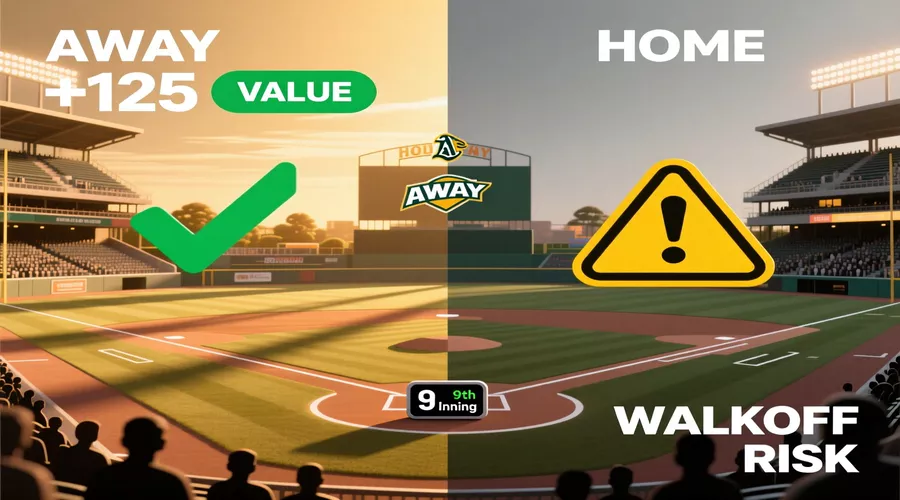
The advantage, as discussed earlier, is the absence of walkoff disadvantage. Road teams trailing or tied in the bottom of the ninth get their final at-bat. If they’re winning by one in the ninth, they still bat. This creates more opportunities to extend leads compared to home favorites.
Look for road favorites with strong starting pitching facing weak offenses. If the Tigers are on the road against the Royals, and Detroit’s ace is throwing against Kansas City’s fifth starter, the Tigers might be minus-180 on the moneyline. Taking them minus-1.5 at plus-125 captures the same expected win but with significantly better payout if they cover.
The Alternative Run Line Value Play
Sometimes the standard 1.5 run line doesn’t offer good odds, but alternative run lines create value. A massive favorite might be minus-250 on the moneyline and still minus-140 on the minus-1.5 run line. Neither offers value. But the minus-2.5 run line at plus-190 might be worth considering if you believe they blow out the opponent.
This works especially well in games with major starting pitcher mismatches. An ace facing a replacement-level starter in a hitter-friendly park can easily produce wins by four or five runs. The odds on the minus-2.5 reflect that this is unlikely, but if you’ve done your homework and identified a genuine mismatch, the payout can be worth the added risk.
Conversely, alternative plus-0.5 run lines on underdogs can offer better value than the moneyline if the odds are right. Instead of betting the underdog at plus-165 to win outright, you might get them at plus-145 on the plus-0.5. You’re giving up twenty cents of payout, but you’re also changing from “they must win” to “they must not lose,” which is a higher probability outcome.
The First Five Innings Run Line
First five innings run lines isolate the starting pitchers and remove late-game variance. A minus-0.5 F5 run line on a road team means they just need to be winning or tied after five innings. This is incredibly useful when you love a starting pitcher matchup but don’t trust either bullpen.
The F5 run line odds are typically much friendlier than full-game run lines because the smaller margin requires less certainty. A road favorite might be plus-120 on the minus-1.5 full-game run line but minus-110 on the minus-0.5 F5 run line. You’re paying a bit of juice but getting a much easier target to hit.
This is particularly valuable for bettors who focus on pitching analysis. If you’ve identified that the starting pitcher matchup heavily favors one side, betting the F5 run line lets you capitalize on that edge while avoiding the bullpen chaos that nullifies starting pitcher dominance.
When to Avoid the Run Line Completely
Understanding when the run line is a trap matters as much as knowing when to use it. Certain situations produce run line bets that look appealing but are actually terrible value.
Home favorites on the run line are structurally disadvantaged. We’ve covered the walkoff problem, but it bears repeating because so many bettors ignore it. Home teams leading by one run in the ninth can’t extend their lead. The game ends. This single factor makes home favorites on the minus-1.5 run line worse bets than the identical road favorite in the identical matchup at identical odds.
If you’re going to bet home favorites, take the moneyline unless there’s a compelling reason to take the run line. The only exception might be a home favorite with an absolutely elite offense facing a terrible bullpen, where you genuinely expect them to blow the game open before the ninth inning.
Games with major weather concerns should be avoided for run lines. Rain delays, wind shifts, temperature changes these external factors add variance that impacts margins of victory unpredictably. A game that looks like a blowout on paper might turn into a one-run game because the temperature dropped fifteen degrees and offense died. Stick to moneylines or totals when weather is a significant factor.
Playoff and high-leverage games see tighter margins. When every pitch matters, when managers are using their best relievers earlier, when teams are playing for one run instead of swinging freely, games get closer. Regular season blowouts happen because teams are playing looser, resting players, and accepting losses that don’t matter much in the standings. October baseball is different. Run lines in playoff games rarely offer good value because the one-run game frequency increases dramatically.
Divisional games with even records produce closer outcomes than expected. When two teams in the same division with similar records play each other for the fifteenth time that season, the familiarity creates parity. These games frequently end 4-3 or 3-2 regardless of which team is favored. The run line in these spots almost never offers value unless you have specific information suggesting one team matchup particularly well today.
Never bet run lines just to bet run lines. This sounds obvious, but bettors constantly take run lines because they’re bored with moneylines or they want better odds on a favorite. The run line should be used when it offers better value than the moneyline for that specific game. If it doesn’t, bet the moneyline or skip the game entirely.
Calculating Run Line Break-Even Points
Understanding the math behind what win rate and coverage rate you need makes run line betting less mysterious and more systematic.
For favorites on the run line, you need two things to happen: the team has to win, and they have to win by two or more runs. If they win by one, you lose the bet. If they lose, you lose the bet. Your break-even coverage rate depends on the odds.
At plus-120 on a minus-1.5 run line, you need to cover forty-seven percent of the time just to break even. That means of every one hundred games where you bet this scenario, you need to win forty-seven times. In those forty-seven wins, you make forty-seven times one hundred twenty dollars. In the fifty-three losses, you lose fifty-three times one hundred dollars. The math breaks even at forty-seven percent.
But here’s where it gets tricky. That forty-seven percent is coverage rate, not win rate. The team might win sixty percent of games but only cover the run line in forty percent. You need to estimate both the win rate and the conditional probability that when they win, they win by two or more runs.
If a team wins sixty percent of their games and covers the 1.5 run line in seventy percent of those wins, their overall coverage rate is forty-two percent. That’s not enough at plus-120 odds. You need forty-seven percent. This is why betting favorites on the run line requires not just picking winners but picking winners who win by enough.
For underdogs on the run line at minus-140, you need to win fifty-eight percent of your bets to break even. But remember, you win the bet if the underdog wins outright OR if they lose by exactly one run. If the underdog wins thirty-five percent of games and loses by one run another thirty percent of games, your coverage rate is sixty-five percent. That’s profitable at minus-140.
The calculation requires estimating how often close games happen for that specific team. Some teams play in lots of one-run games because of their bullpen quality, ballpark factors, and offensive approach. Other teams either blow out opponents or get blown out, with fewer close games. The run line offers different value depending on these tendencies.
Live Betting the Run Line
Live betting transforms run line strategy because the spread and odds update constantly based on the game situation. A team trailing by one run in the third inning might offer plus-200 on the minus-1.5 live run line, which would never be available pregame.
The most obvious opportunity comes when heavy favorites fall behind early. If the Yankees are minus-200 pregame and they’re losing 2-1 in the fourth inning, their live moneyline might be plus-150 and their minus-1.5 run line might be plus-300 or better. If you believe they’ll come back and win big, this offers tremendous value compared to betting them pregame.
The risk is that the deficit might be insurmountable. Betting comebacks is inherently risky because you’re fighting not just probability but also the psychological impact of being down. Teams that fall behind early sometimes pack it in mentally, especially in June or July when individual games matter less.
The inverse opportunity involves taking live run lines on teams that are already winning comfortably. If a team is up 5-1 in the sixth inning, their minus-1.5 run line might have moved to minus-180 or worse. That’s often not worth it because the odds have adjusted too much. But the plus-1.5 on the trailing team might have moved to plus-140 or better. If you believe the trailing team mounts a comeback or at least makes it close, betting them live on the run line offers value.
The key to live run line betting is identifying situations where the live odds don’t properly account for the likely final margin. A team up 3-0 after two innings against a terrible pitcher might see their run line odds move significantly, but if you know that terrible pitcher is about to get pulled and the bullpen is actually decent, the odds might be overreacting to the early scoring.
Bankroll Management for Run Line Betting
Run lines require slightly different bankroll considerations than moneylines because of the altered risk-reward structure.
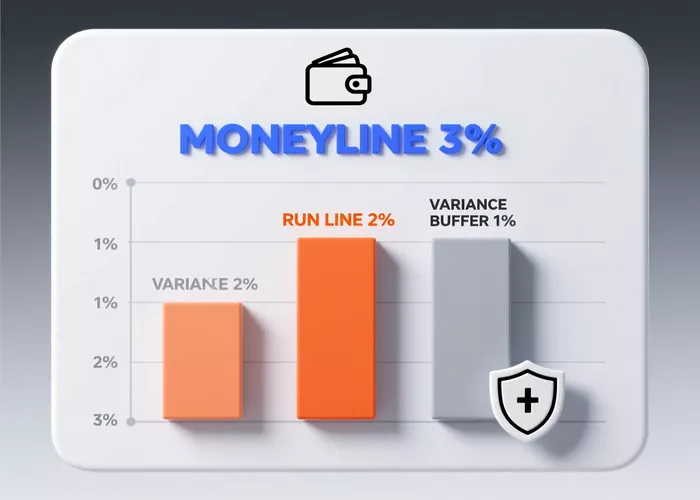
The variance on run lines is higher than moneylines. You can pick winners consistently but lose money on the run line if they keep winning by one run. This increased variance means you should potentially bet smaller units on run lines than you would on comparable moneyline bets.
If you typically bet three percent of your bankroll on a moneyline play, consider betting two percent on a run line play of similar confidence. The extra margin for error protects you during stretches where you’re picking winners but they’re not covering.
Tracking your run line performance separately from your moneyline performance reveals whether you’re actually good at this bet type. Some bettors have a genuine skill for identifying games that will be blowouts. Other bettors consistently pick close games. If you fall into the latter category, you should probably avoid run lines entirely and stick to moneylines where close wins still pay.
The juice on underdog run lines creates different break-even requirements too. Paying minus-140 or minus-150 for an underdog run line means you need to win more often than fifty percent just to break even. Over time, if you’re not covering above that break-even rate, you’re losing money even if it feels like you’re winning lots of bets. The scoreboard might say you won, but your bankroll says otherwise.
Common Run Line Mistakes
Avoiding mistakes matters as much as making good bets. These are the patterns that consistently cost run line bettors money.
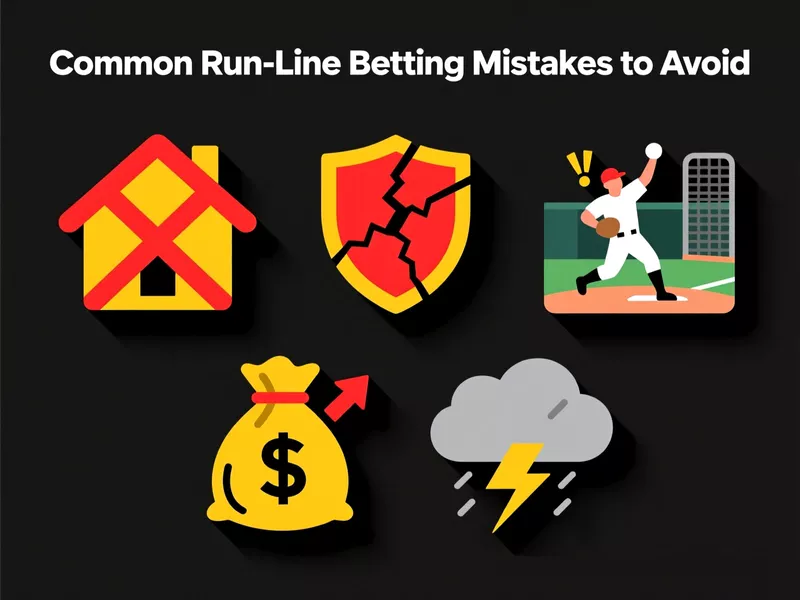
Betting home favorites on the run line automatically is the number one mistake. The walkoff disadvantage is real and meaningful. Unless you have specific reasons to believe this home favorite will blow out the opponent, the moneyline is almost always better value.
Taking underdog run lines purely for safety without considering the juice is mistake number two. Paying minus-145 for a plus-1.5 run line feels safer than betting the plus-165 moneyline, but you need to cover sixty percent of the time at minus-145. That’s a high bar. If you think the underdog has a real chance to win, take the moneyline and collect the better payout.
Ignoring bullpen matchups destroys run line bettors constantly. You bet a favorite on the run line because their starter is excellent. The starter dominates for six innings, the team is up 4-2, and then the bullpen implodes. Final score 6-4, the other team wins, your run line is dead. Checking bullpen quality before betting run lines is non-negotiable.
Chasing better odds on favorites without considering coverage probability is the trap that gets football and basketball bettors who wander into baseball. That minus-200 favorite looks terrible, so you take them minus-1.5 at plus-130 for better odds. But if they only win by two or more runs forty percent of the time, you just made a worse bet despite getting better odds. The odds only matter relative to the probability of the outcome.
Betting run lines in bad weather adds unnecessary variance. Wind can turn what should be a 6-2 game into a 4-3 game, or vice versa. Cold temperatures suppress offense unpredictably. When external factors are major variables, stick to bet types that aren’t dependent on specific margins of victory.
The run line is a tool, nothing more and nothing less. It’s not inherently better or worse than the moneyline it’s different, with different strategic applications and different value propositions depending on the situation.
Understanding when to use the run line versus the moneyline requires analyzing not just who wins but by how much they win. It requires understanding the structural disadvantages of home favorites and the advantages of road favorites. It requires calculating break-even rates and comparing them to realistic coverage probabilities. It requires tracking one-run game frequencies and bullpen qualities.
Most bettors use the run line wrong. They take it for better odds without considering coverage rates. They reflexively bet home favorites on the run line because they’re favorites. They pay juice for underdog safety cushions they don’t need. They ignore the thirty-five percent of games decided by one run and treat the run line like a standard point spread.
Baseball isn’t football or basketball. The run line isn’t a traditional spread. Trying to use it the same way guarantees long-term losses. But used correctly in specific situations where the odds properly reflect the increased risk the run line becomes another avenue for extracting value from baseball betting markets.
Whether you’re betting massive favorites at plus-money on the minus-1.5 or taking underdogs with the extra run cushion, the key is knowing why you’re choosing the run line over the moneyline. If you can’t articulate the specific reason this particular game warrants a run line bet instead of a moneyline bet, you’re probably making a mistake. The run line isn’t a default option. It’s a strategic choice that should be deployed deliberately when the situation and odds align.
