
2026 Baseball Prop Betting – Live Performance Tracker
 Available in US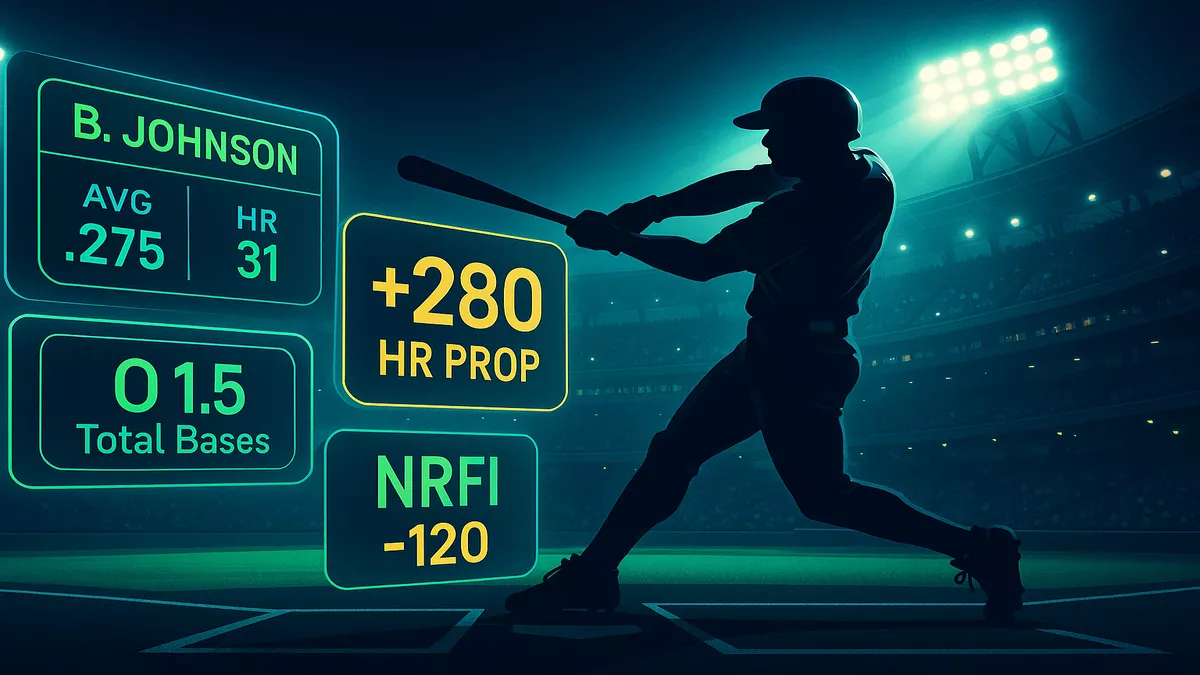
Betting on whether the Yankees beat the Red Sox is one thing. Betting on whether Aaron Judge hits a home run tonight is something else entirely. That’s the world of prop betting, and it’s taken over baseball wagering in a way nobody predicted five years ago.
Props—short for proposition bets—let you wager on specific outcomes within a game rather than the game’s final result. Will this pitcher strike out seven batters? Will that hitter record two or more hits? Will someone hit a grand slam? Will the first inning see any runs scored? These micro-markets have exploded in popularity because they offer action on every pitch, every at-bat, every individual performance.
The sportsbooks love props because they create dozens of betting opportunities per game instead of just three or four. Bettors love props because they can target specific matchups and situations where they have information advantages. A casual fan might not know which team wins tonight, but a dedicated follower of the Dodgers probably knows that their cleanup hitter crushes left-handed pitching and tonight’s starter is a lefty who gives up barrels constantly.
This is where props become genuinely interesting. The betting markets for moneylines and totals are efficient—thousands of bets and sharp money ensure the lines are tight. But props? The sportsbooks can’t possibly set perfect lines for every single player prop across fifteen games per night. Inefficiencies exist everywhere for bettors willing to do the research.
This guide covers everything you need to know about baseball prop betting. We’ll break down hitter props, pitcher props, game props, same game parlays, and the increasingly popular NRFI market. You’ll learn how to research matchups properly, which statistics actually matter, and how to avoid the traps that destroy prop bettors who treat these bets like lottery tickets instead of analytical opportunities.
Building High-Yield Prop Parlays in 2026
The variety of available props is staggering. On any given night, a single game might have fifty or more prop betting options. Understanding what’s available and which props offer the best value is the foundation of successful prop betting.
Leveraging the sharpest baseball betting platforms will give you access to a wider variety of player and game props.
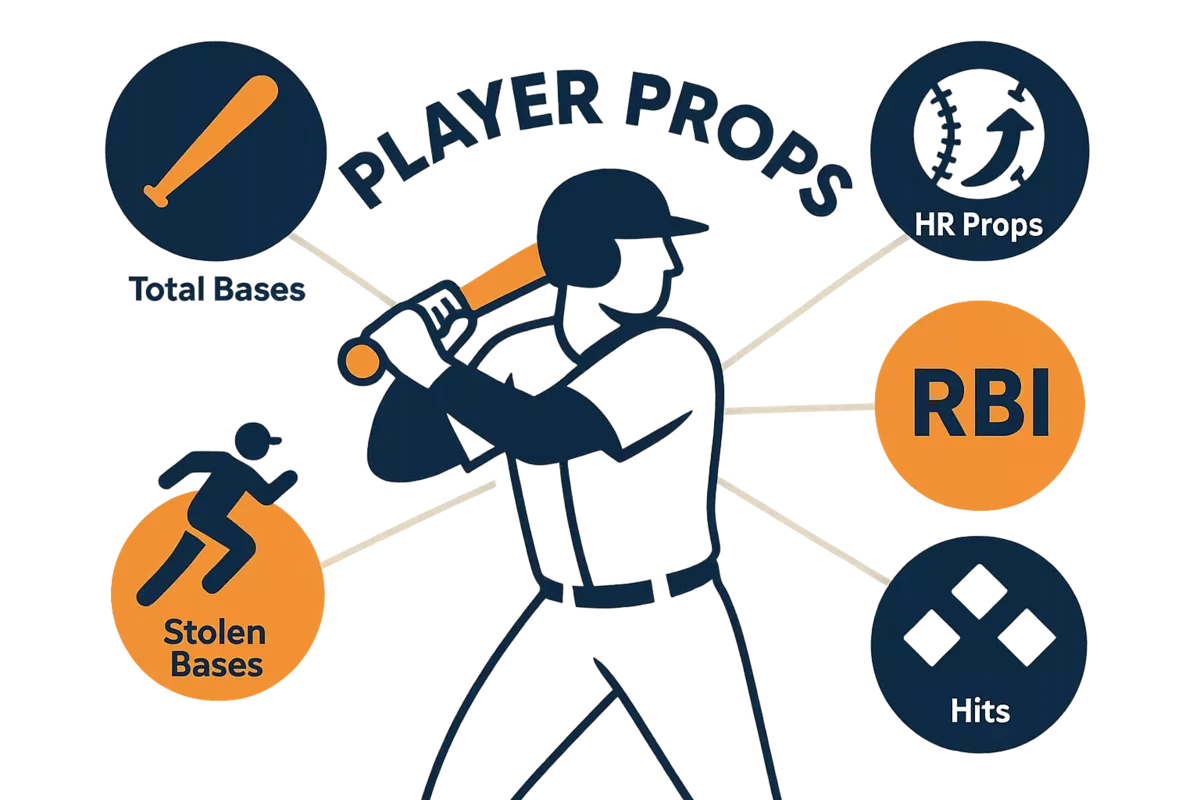
Hitter props focus on offensive player performance. The most common is total bases, where you’re betting over or under a number like 1.5 bases. A single counts as one base, a double as two, a triple as three, and a home run as four. If a player hits a single and a double in the game, that’s three total bases. This prop is appealing because it rewards extra-base hits more than batting average would suggest.
Hits are straightforward—will the player record at least one hit, or two hits, or three hits? The odds shift dramatically based on the threshold. A good hitter might be minus-200 to record one or more hits but plus-300 to record three or more. These props depend heavily on how many plate appearances the player gets, which correlates to lineup position and game situation.
Home run props are the most popular hitter props because everyone loves dingers. The standard version is a simple yes or no—will this player hit a home run in the game? Power hitters in good matchups might be plus-250 to plus-350. Weaker power hitters or bad matchups might be plus-800 or longer.
RBI props bet on runs batted in. These are more situation-dependent than pure hitting props because you need runners on base to drive in runs. A hitter batting second or leadoff has fewer RBI opportunities than the cleanup hitter. The three-four-five slots in the order present better RBI prop value because they get more chances with runners on.
Runs scored props bet on whether a player crosses home plate. Leadoff hitters and players batting early in the order offer better value on runs scored props because they have more plate appearances and score more frequently. Cleanup hitters who drive in runs but don’t score as often are usually overpriced on runs scored props.
Stolen base props exist but are tricky. Few players steal bases consistently anymore, and the ones who do are priced accordingly. You might find a speed guy at minus-130 to steal a base, but that’s a high price for something that requires both opportunity—getting on base—and execution—actually stealing successfully.
Pitcher props center on strikeout totals most commonly. The line might be set at 6.5 strikeouts for a starter, and you bet over or under. This is purely analytical—you’re looking at the pitcher’s strikeout rate and the opposing team’s strikeout rate and determining if 6.5 is too high or too low.
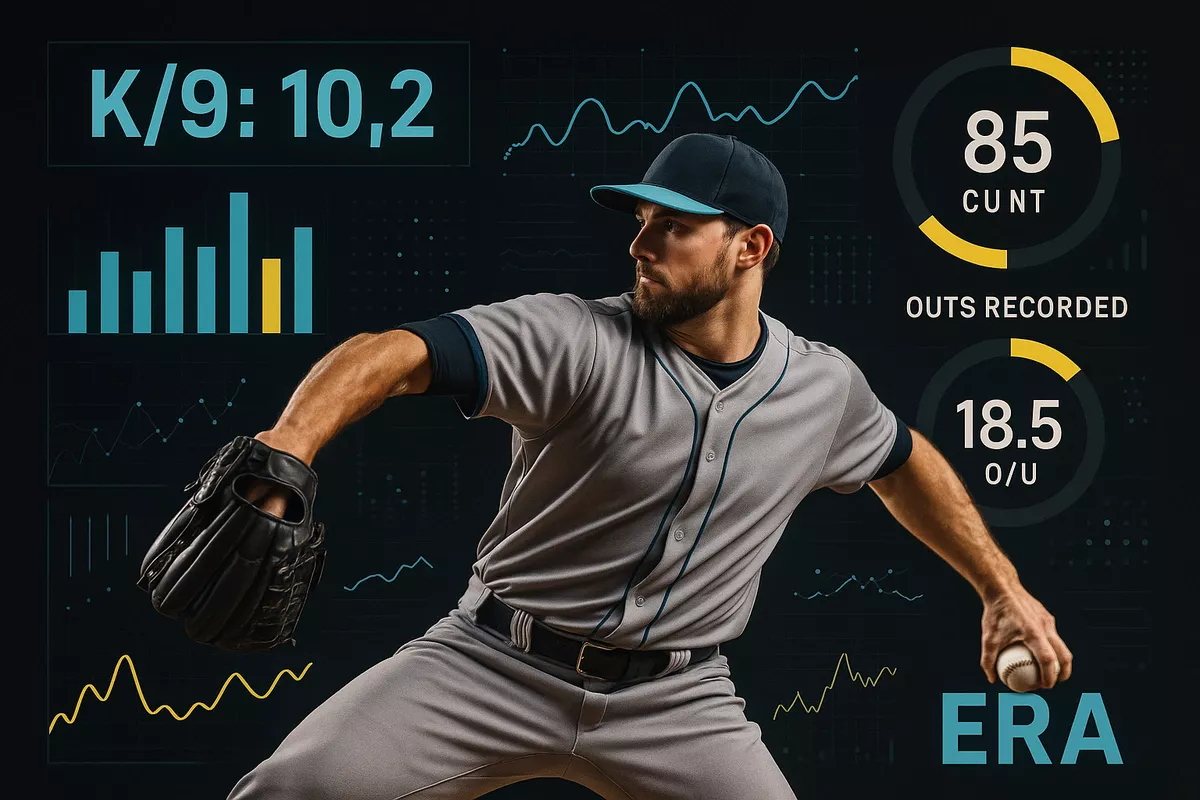
Outs recorded props bet on how many outs the starting pitcher records. This is essentially betting on how long he lasts in the game. A starter expected to go six or seven innings might have an outs recorded line of 17.5 or 18.5. If you believe he gets knocked out early or throws a lot of pitches and doesn’t last, you’d bet under.
Hits allowed, walks allowed, and earned runs allowed are also available but less popular. These depend heavily on defense and luck on balls in play, making them harder to predict than strikeouts which are entirely pitcher-controlled.
Win props—betting whether the starting pitcher gets the win—are largely dependent on team offense and bullpen performance after the starter exits. The pitcher can throw eight shutout innings and still not get the win if the offense doesn’t score. These props are usually not worth the research required because too many external factors determine the outcome.
Game props cover specific events or outcomes within the game. Will there be a grand slam? Will the game go to extra innings? What will be the highest-scoring inning? Which team scores first? These are generally lower-edge bets because they’re difficult to predict with any consistency.
The exception is NRFI and YRFI—no run first inning and yes run first inning. These have become massive markets because they settle quickly and can be analyzed systematically. We’ll cover NRFI strategy in detail later because it deserves its own section.
Combination props bundle multiple stats together. The most popular is hits plus runs plus RBIs. If a player goes two for four with one run scored and two RBIs, that’s five total for the H+R+RBI prop. These combination props often offer better odds than betting each component individually, but they require multiple things to go right simultaneously.
Same game parlays let you combine multiple props from the same game into one bet with multiplied odds. You might parlay a home run prop, a strikeout prop, and a team total into one wager. If all three hit, the payout is significantly higher than betting them individually. The catch is that sportsbooks price these parlays with extra juice, so you need to be right on all legs and overcome the additional edge.
How to Research Player Props
Research separates profitable prop bettors from gamblers throwing darts at a board. The information exists to make informed decisions, but you have to know where to look and what matters.
Matchup history is the starting point. How has this batter performed against this specific pitcher historically? Small sample size warnings apply—two at-bats three years ago means nothing—but if they’ve faced each other eight times this season and the batter is hitting .450 with two home runs, that’s meaningful data.
Baseball Savant and similar sites track this granular data. Don’t rely on memory or general impressions. Look up the actual numbers. Sometimes you’ll discover that a hitter you assumed struggled against a pitcher actually crushes him, or vice versa.
Recent form matters enormously for hitter props. A player’s season-long batting average is less relevant than what he’s done in the last seven to fourteen games. Hot streaks are real. So are cold streaks. Batting is timing, and when a player’s timing is on, they hit everything hard. When it’s off, they’re chasing bad pitches and making weak contact.
Check the last two weeks of games. Is this hitter seeing the ball well? Are they hitting for power or just slapping singles? Have they been robbed by good defense or getting lucky on bloopers? The quality of contact matters as much as the results. A player making hard contact but getting unlucky will eventually start getting hits. A player with a high batting average on weak contact is due for regression.
Platoon advantages create edges sportsbooks sometimes misprice. A left-handed batter facing a left-handed pitcher is generally at a disadvantage because the ball comes from an angle they see less frequently. The same applies to righties versus righties. Opposite-handed matchups are more favorable.
Some hitters have massive platoon splits. They might hit .290 against righties but only .220 against lefties. If tonight’s matchup puts them against a same-handed pitcher, their prop lines might not fully account for the disadvantage. Conversely, a favorable platoon matchup—especially a righty power hitter against a lefty who gives up fly balls—creates home run prop value.
Park factors influence hitter props significantly. Coors Field in Colorado is a launching pad. Oracle Park in San Francisco suppresses offense. Yankee Stadium has a short porch in right field perfect for lefty power. Fenway has the Green Monster creating unique dynamics.
A home run prop that looks marginal in a neutral park becomes attractive at Coors. A total bases prop that seems good in a neutral park becomes questionable at Oracle. Factor the ballpark into every hitter prop bet. The lines sometimes don’t fully account for extreme park factors, creating opportunities.
Lineup position determines opportunities. The leadoff hitter gets four to five plate appearances most games. The ninth hitter in the order might only get three. More plate appearances mean more chances to record hits, score runs, or hit home runs. A hits prop on the leadoff hitter is easier to cover than the same prop on the seventh hitter simply because of opportunity.
This is especially relevant for total bases props and hit props where volume matters. The sportsbooks set the lines accounting for lineup position, but they don’t always adjust enough for games where the player might move up or down in the order.
Weather affects hitter props, especially home runs. Wind blowing out to the outfield helps balls fly. Warm temperatures increase distance on fly balls. Cold weather suppresses power. Checking the weather forecast before betting home run props is mandatory. A home run prop at plus-280 in calm winds might be plus-250 if oddsmakers knew there would be fifteen mile per hour winds blowing out.
Pitcher Prop Strategy
Pitcher props, particularly strikeouts, are the most analytically predictable props available. The data exists to make genuinely informed decisions with real edges.
Strikeout rate—K/9—is the foundation. A pitcher who averages ten strikeouts per nine innings should strike out between six and seven batters in a six-inning start. If the over-under is set at 5.5, the over looks appealing. If it’s set at 7.5, the under might have value. The baseline expectation comes from the pitcher’s seasonal strikeout rate.
But you can’t stop there. The opposing team’s strikeout rate matters just as much. A pitcher averaging eight K/9 facing a team that strikes out twenty-eight percent of the time will likely exceed his average. The same pitcher facing a contact-oriented team that only strikes out eighteen percent of the time will struggle to hit his average.
The combination of pitcher strikeout rate and opponent strikeout rate gives you the expected strikeout total. Compare that to the line. If your calculation says seven strikeouts and the line is 5.5, you’ve found value on the over. If your calculation says five and the line is 6.5, the under offers edge.
To avoid late-game bullpen volatility, many experts focus on first five innings betting to isolate the starting pitcher’s performance.
Pitch count expectations determine outs recorded props. If a pitcher averages ninety-five pitches per start, he’s likely going six innings, which is eighteen outs. If the outs recorded line is set at 16.5, the over makes sense. If it’s set at 19.5, the under is probably correct unless you have reason to believe he goes deeper than usual tonight.
Check how the pitcher’s recent starts played out. Is he consistently throwing one hundred plus pitches and going seven innings? Or is he getting pulled after eighty-five pitches and five innings? Recent usage patterns predict future usage better than seasonal averages.
First-time-through-the-order performance is relevant for strikeout props because some pitchers rack up strikeouts early when batters haven’t adjusted, while others struggle the first time through and improve later. If you’re betting strikeout props, you want pitchers who miss bats early and often.
Umpire strike zones matter for strikeout props more than people realize. An umpire with a tight zone makes it harder for pitchers to get called strikes on borderline pitches, which leads to more walks and fewer strikeouts. An umpire with a generous zone helps pitchers work the edges and rack up strikeouts on pitches batters don’t swing at.
Several websites track umpire tendencies. Check who’s behind the plate tonight before betting pitcher props. A strikeout prop might shift from marginal to clear value just based on the umpire assignment.
Home Run Prop Strategy
Home run props are the most popular player props, and they’re also the props where casual bettors lose the most money because they bet on name recognition rather than actual matchup analysis.
Start with the pitcher’s home run rate. Some pitchers give up home runs constantly—over 1.5 per nine innings. Others rarely allow homers—under 0.7 per nine. If tonight’s pitcher has a HR/9 above 1.5, home run props on opposing hitters are immediately more appealing than usual.
The pitcher’s pitch type and approach matter too. Fly ball pitchers who work up in the zone give up more home runs than ground ball pitchers who work down. A power hitter facing a fly ball pitcher who leaves pitches elevated is the ideal home run prop setup.
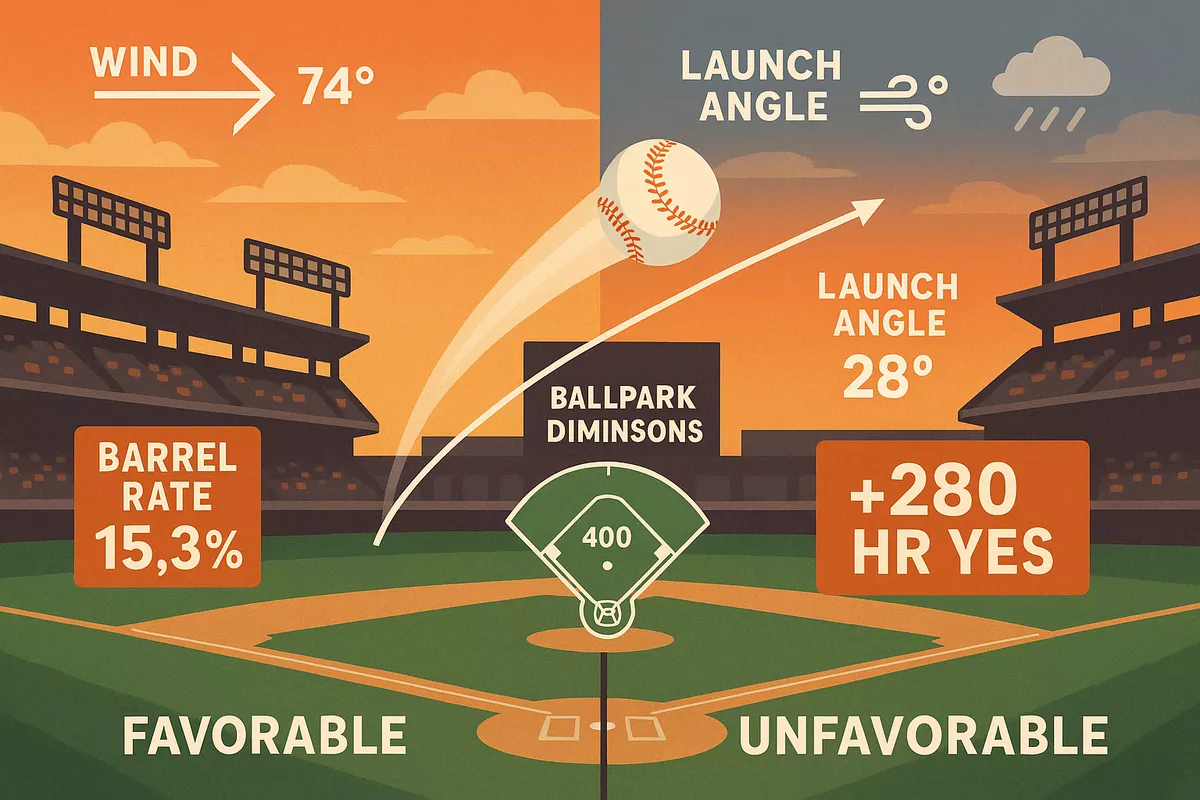
Barrel rate and hard-hit percentage on the hitter’s side predict home runs better than home run totals do. Some hitters hit a lot of home runs because they play in great parks or have gotten lucky. Others barrel the ball constantly and hit it hard but haven’t seen the home runs fall yet. Barrel rate—the percentage of batted balls with ideal exit velocity and launch angle—is predictive.
If a hitter has a high barrel rate but fewer home runs than expected, they’re due for positive regression. Their home run prop might be priced based on their current home run total rather than their barrel rate, creating value.
Wind is the single biggest environmental factor for home run props. Ten mile per hour winds blowing out can turn warning track fly balls into home runs. Ten mile per hour winds blowing in can turn home runs into loud outs. Always check wind speed and direction before betting home run props. This information is freely available and crucial.
Ballpark dimensions create edges. Short porches, high altitudes, and small ballparks increase home run probability. Deep outfields and sea-level parks suppress home runs. The same exact fly ball might be a home run at Yankee Stadium and a routine fly out at Oracle Park. Factor the venue into every home run prop.
Avoid betting home run props on pitchers with excellent control and low walk rates. These pitchers don’t beat themselves by putting hitters in favorable counts. They work ahead, throw quality strikes, and don’t serve up meatballs. Even great power hitters struggle to hit home runs when they’re hitting from behind in the count against pitchers with command.
Same Game Parlay Strategy
Same game parlays have become massively popular, and they’re exactly what sportsbooks want you to bet. The payouts look amazing. The odds are astronomical. And the sportsbooks make a killing because people build parlays with no correlation or strategic thought.
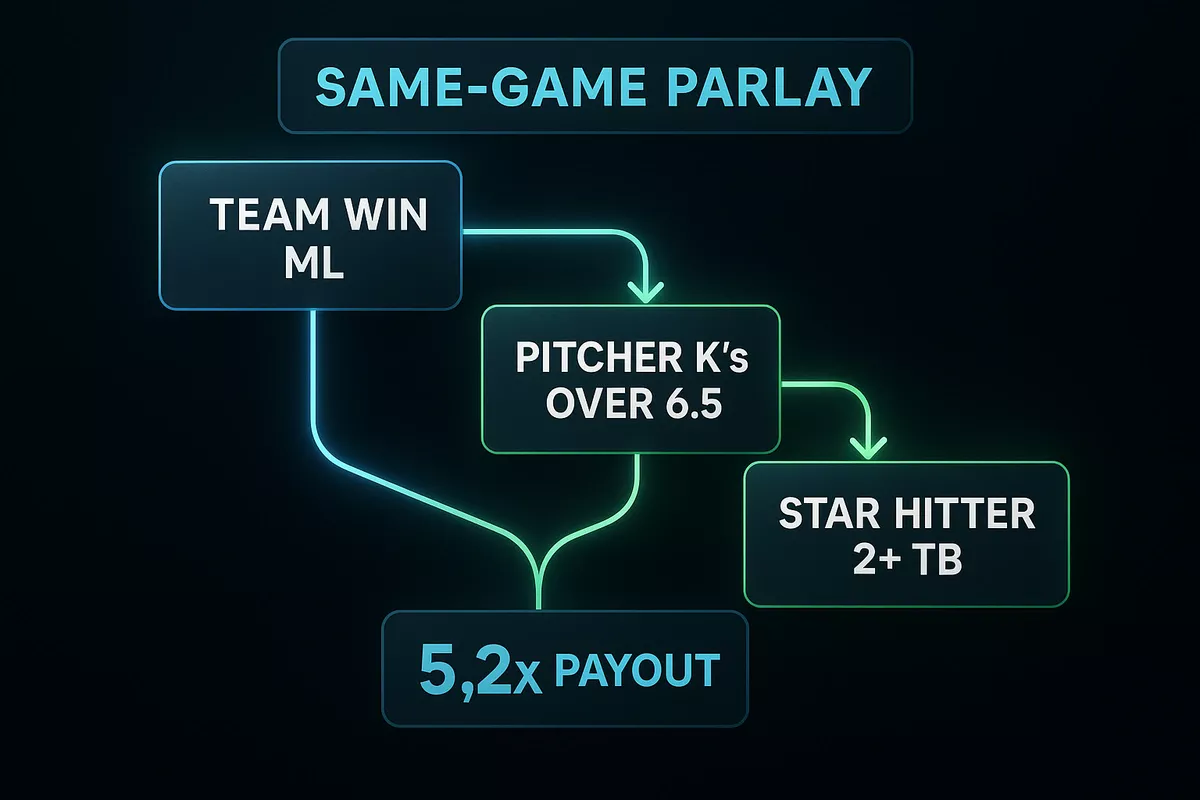
The key to same game parlays is correlation between legs. If you’re betting a team to win big, also bet their star hitter’s total bases over, because if the team wins big, their best hitters probably contributed. If you’re betting a pitcher’s strikeout over, also bet the under on total runs, because high strikeout games tend to be lower scoring.
Avoid uncorrelated parlays where the outcomes have nothing to do with each other. Betting one team’s pitcher to record seven strikeouts, another team’s hitter to get two hits, and the first team to win is three completely independent events. You might as well be betting them separately because there’s no strategic advantage to combining them beyond multiplying the odds.
Sportsbooks price same game parlays with extra juice compared to betting legs individually. You need to overcome this edge. The only way to do that consistently is finding correlated outcomes where the combination of events happening together is more likely than the individual probabilities multiplied would suggest.
Start with a strong primary bet. If you believe the Dodgers win tonight, that’s your base. Then build correlated props around that assumption. Their ace strikes out eight batters. Their cleanup hitter goes over total bases. The game stays under the total because the winning pitcher dominates. These outcomes are correlated with the Dodgers winning, which makes the parlay strategically sound rather than just stacking random props.
Limit same game parlays to three legs maximum. The more legs you add, the exponentially harder it becomes to win. A three-leg parlay might pay five to one. A five-leg parlay might pay thirty to one. But your chances of hitting all five legs are astronomically lower than hitting three. The juice the sportsbook adds compounds with each additional leg.
Most winning prop bettors avoid same game parlays entirely because the math doesn’t work. If you’re going to bet them, treat them as entertainment with small stakes, not as a core betting strategy. The occasional win feels amazing, but long-term profitability is nearly impossible unless you have genuine edges on every single leg and the correlation is strong.
NRFI Betting: No Run First Inning
NRFI—no run first inning—has become its own betting universe because it settles in fifteen minutes and can be systematically analyzed. The bet is simple: will either team score in the first inning? If both teams are scoreless after the first, the NRFI wins. If either team scores, the YRFI—yes run first inning—wins.
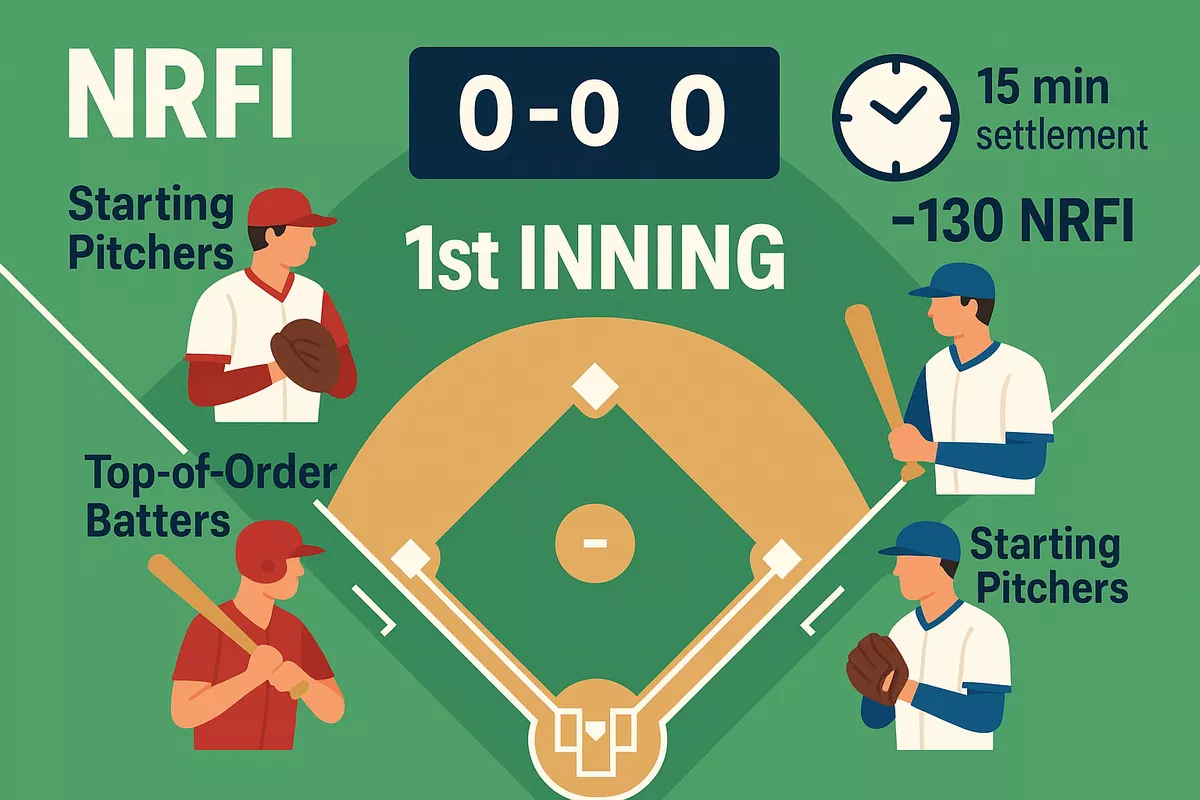
Starting pitcher first-inning performance is the critical data point. Some pitchers are statistically worse in the first inning than later innings. They need an inning to warm up and find rhythm. Others are actually better the first time through because batters haven’t adjusted. Check the pitcher’s first-inning ERA specifically, not just their overall numbers.
Top-of-the-order matchups determine NRFI value. The first inning is primarily about the leadoff hitter, second hitter, and third hitter facing the starting pitcher. If those three batters historically struggle against this pitcher or this pitch type, the NRFI becomes appealing. If those batters crush this pitcher, stay away from NRFI.
Both teams’ top of the order matter. You need neither team to score. If one team’s first three hitters are slumping while the other team’s are hot, you’re fighting uphill for the NRFI. Ideally, both starting pitchers are dealing and both top thirds of the order are struggling or facing unfavorable matchups.
Weather affects NRFI just like full-game totals. Cold weather suppresses offense, which helps NRFI. Wind blowing in keeps balls in the park, which helps NRFI. Hot weather and wind blowing out hurt NRFI. Check conditions before betting.
NRFI odds are generally better value than full-game unders when you believe both starting pitchers are excellent. A full-game under might require seven-plus innings of good pitching from both sides. NRFI only requires one inning. If you love both starters but don’t trust the bullpens, NRFI isolates the part of the game you’re confident about.
The typical NRFI line is around minus-120 to minus-140. You’re paying juice, but you’re getting a bet that settles in fifteen minutes with reasonably predictable inputs. Track your NRFI results separately because some bettors develop genuine edges in this market while others never figure it out.
Avoiding Common Prop Betting Mistakes
Props create so many betting opportunities that it’s easy to fall into patterns that slowly bleed your bankroll without you realizing it.
Betting props on name recognition rather than matchup analysis is the number one mistake. Everyone knows the star players, so everyone bets their props. The sportsbooks know this and price those props with extra juice. The third hitter in the lineup might offer better value than the cleanup hitter simply because casual money piles onto the bigger name.
Do your research on every prop bet the same way you would a moneyline bet. The work should be similar or greater, not less just because it’s a prop. If you’re not willing to spend five minutes analyzing the matchup, don’t bet the prop.
Chasing big odds on longshot props is a trap. That plus-800 home run prop looks enticing because one hit makes your night. But if the true probability is two percent—one in fifty—and you’re getting plus-800 odds which implies an eleven percent probability, you’re still getting terrible value. The odds look big, but they’re not big enough relative to how unlikely the outcome actually is.
Longshot props occasionally hit, and when they do, bettors remember those wins vividly. What they forget are the dozens of times they lost. The memorable wins create false confidence that these bets are good when the math says they’re terrible.
Ignoring lineup confirmations costs prop bettors constantly. You bet a prop on a player in the afternoon. The lineup gets posted an hour before game time, and that player isn’t starting today. He’s getting a rest day. Your bet is dead before the game even starts. Always check confirmed lineups before your bet locks in.
Betting too many props per night spreads your bankroll too thin. Props are tempting because there are so many available. You can find ten props per night that look good. But betting ten props at one percent of your bankroll each means you’re exposed on ten percent of your bankroll on one night of games. The variance becomes enormous.
Limit yourself to two or three props per night maximum. Focus on the ones where your analysis is strongest and the edge is clearest. Quality over quantity applies to props more than any other bet type because the edges are often smaller than moneyline or total bets.
Treating props like lottery tickets instead of analytical bets is the mindset problem that destroys prop bettors. Props aren’t entertainment or fun gambles—they’re bets that require research and disciplined betting strategy just like any other wager. If you’re betting props for fun without doing the work, you’re donating money to sportsbooks.
Bankroll Management for Prop Betting
Props require disciplined bankroll management because the variance is higher and the volume of potential bets is enormous.
Bet smaller units on props than on moneylines or totals. If you typically bet two percent of your bankroll on a moneyline bet, bet one percent on a prop. The higher variance justifies the reduced bet size. Props involve more randomness than team-level bets because you’re isolating individual performances which are inherently more variable.
Track every prop bet in detail. Record the player, the prop type, the odds, the result, and the profit or loss. After a hundred prop bets, analyze your results. Are you profitable on hitter props but losing on pitcher props? Are home run props crushing you while total bases props make money? This data tells you where your edge lives and where you’re fooling yourself.
Avoid betting props on credit or chase losses. The quick settlement of props—many settle within a few innings—creates temptation to fire more bets to recover losses. This is how prop bettors spiral into disaster. Stick to your unit size. If you lose three prop bets early in the night, don’t start betting bigger to get even. Take the loss and come back tomorrow.
Set a maximum number of props per night and stick to it. Maybe it’s three props per night, maybe it’s five. Whatever your limit is, enforce it religiously. The discipline of saying “I’ve hit my limit for tonight” prevents the snowball effect where you keep finding props to bet until you’ve overextended.
The long-term goal is building a track record of profitable prop betting through disciplined research and controlled bet sizing. The short-term variance will be wild—you’ll have nights where you go four for four and nights where you go zero for five. The only way to know if your approach actually works is betting consistently with controlled stakes and tracking results over hundreds of bets.
Prop betting transformed baseball wagering by creating dozens of betting opportunities per game where previously only a few existed. This creates genuine edges for bettors willing to do granular research on matchups, statistics, and situations that casual bettors ignore.
But props aren’t free money. They’re highly competitive markets where sportsbooks use sophisticated pricing models and adjust lines based on betting patterns. The advantage props offer is that the sheer volume of props means the books can’t possibly price everything perfectly. Small inefficiencies exist everywhere for bettors who specialize and develop expertise.
Success in prop betting requires treating each bet as seriously as you’d treat a moneyline or total bet. The research should be thorough. The bet sizing should be disciplined. The tracking should be detailed. Props that look like fun entertainment bets are actually complex analytical puzzles that reward systematic approaches and punish casual gambling.
Whether you’re betting home runs, strikeouts, total bases, or same game parlays, the underlying principle remains constant: find spots where your analysis suggests a different probability than the betting line implies. Extract value from those edges consistently while managing bankroll carefully through inevitable variance. That’s how prop betting becomes profitable rather than just another way to lose money while watching baseball.
